
It sounds like a question with a simple number for an answer, but it isn’t. NYC’s Local Law 157 doesn’t hand building owners a flat count of alarms per apartment or per building — it hands them a rule about placement, and the number falls out of how that rule applies to each unit’s actual gas appliances. A studio with a single gas stove needs something different than a two-bedroom unit with a stove in the kitchen and a gas water heater tucked into a utility closet down the hall. Getting the count right means understanding the rule well enough to apply it room by room, not multiplying apartments by one and calling it done.


Published on 24 September 2026
How Many Natural Gas Detectors Do I Need in My NYC Apartment or Building?
In this article:
The Baseline: One or More Alarms Per Dwelling
Under 1 RCNY §908-02, the NYC rule implementing Local Law 157, one or more natural gas alarms must be installed in each covered dwelling — a category that includes private dwellings and both Class A and Class B multiple dwellings. That “one or more” phrasing is doing a lot of work: it’s a floor, not a fixed quantity, and the actual number depends on what’s inside a given unit.
Units that contain no gas appliances at all and have no natural gas service generally fall outside this requirement, since the rule is tied to the presence of fuel-gas-burning equipment rather than applying uniformly to every apartment in a building regardless of how it’s fueled. An all-electric unit in an otherwise gas-served building is exactly the kind of case worth confirming with NYC Department of Buildings guidance rather than assuming either way.
Why One Per Apartment Often Isn’t Enough
The detail that actually drives the count is placement. Where a fuel-gas-burning appliance is installed within a dwelling, the alarm must generally go in the same room as that appliance, positioned at least 3 feet but no more than 10 feet away, measured horizontally. A single alarm covering an entire apartment doesn’t satisfy that requirement if the gas stove is in the kitchen and a separate gas-fired water heater or boiler sits in a utility room down the hall — those are two different rooms with two different appliances, which in practice means two alarms rather than one.
That’s the real answer to “how many”: count the rooms in a unit that contain a fuel-gas-burning appliance, and plan for one alarm in each of them, rather than treating the whole apartment as a single zone that one device can cover.
What Counts as a Covered Building
Local Law 157 applies to private dwellings, Class A buildings, and Class B multiple dwellings that are connected to natural gas piping or service, or that contain gas-burning appliances. Class A buildings are the ordinary residential apartment type most people picture — permanent, self-contained units. Class B buildings cover a different category, including properties like rooming houses and certain transient or non-family occupancies, and the rule treats them somewhat differently, which matters for how a whole building’s requirement is calculated rather than just an individual unit’s.
Class B Buildings and the Corridor System Alternative
For Class B buildings specifically, the rule offers a second compliance path beyond unit-by-unit alarms: a line-operated, zoned natural gas detecting system, designed in accordance with NFPA 715 by a registered design professional, installed throughout the public corridors and public spaces of the building. Where a Class A building’s count is essentially a sum of what each dwelling unit needs, a Class B building’s owner has the option to size a single building-wide detection system instead, engineered around the layout of shared spaces rather than individual rooms.
Don’t Just Multiply Apartments by One
For a portfolio spanning many units, it’s tempting to treat the unit count as the alarm count — a 100-unit building gets 100 alarms, done. That assumption breaks in both directions. A unit with gas appliances in two separate rooms needs more than one alarm on its own, while an all-electric unit with no gas service may need none at all. The only reliable way to land on an accurate number is a unit-by-unit survey: walking each apartment, noting every fuel-gas-burning appliance and which room it’s in, and confirming whether the building’s classification changes anything about how the requirement applies. Skipping that step in favor of a round number is how portfolios end up either under-installed in units with multiple appliances or over-ordering equipment for units that never needed it.
Who Pays for Installation and Upkeep
Building owners and boards carry the initial cost of purchasing and installing the required alarms. That responsibility continues after installation, too — an owner is generally on the hook for replacing a device that’s stolen, removed, or found inoperable through no fault of the occupant. Where a unit owner, shareholder, or tenant is responsible for damage, removal, or a similar issue, they can be charged for a portion of the repair or replacement cost, though that’s a narrower carve-out rather than the general rule. For co-op and condo boards in particular, working out this cost allocation ahead of installation avoids disputes later, especially across a building with a mix of owned and rented units.
Keeping Detectors Working and Compliant Over Time
Meeting Local Law 157’s installation requirements on day one doesn’t guarantee a building stays compliant a year later. These alarms rely on systems that need occasional maintenance: batteries fail, sensors drift, and a device that was working at inspection can go silent without anyone noticing. Building owners who want to comply with the rule on an ongoing basis, not just satisfy the requirements once, generally need some way to confirm every device is still monitored and active, rather than assuming a unit installed months ago will keep working on its own.
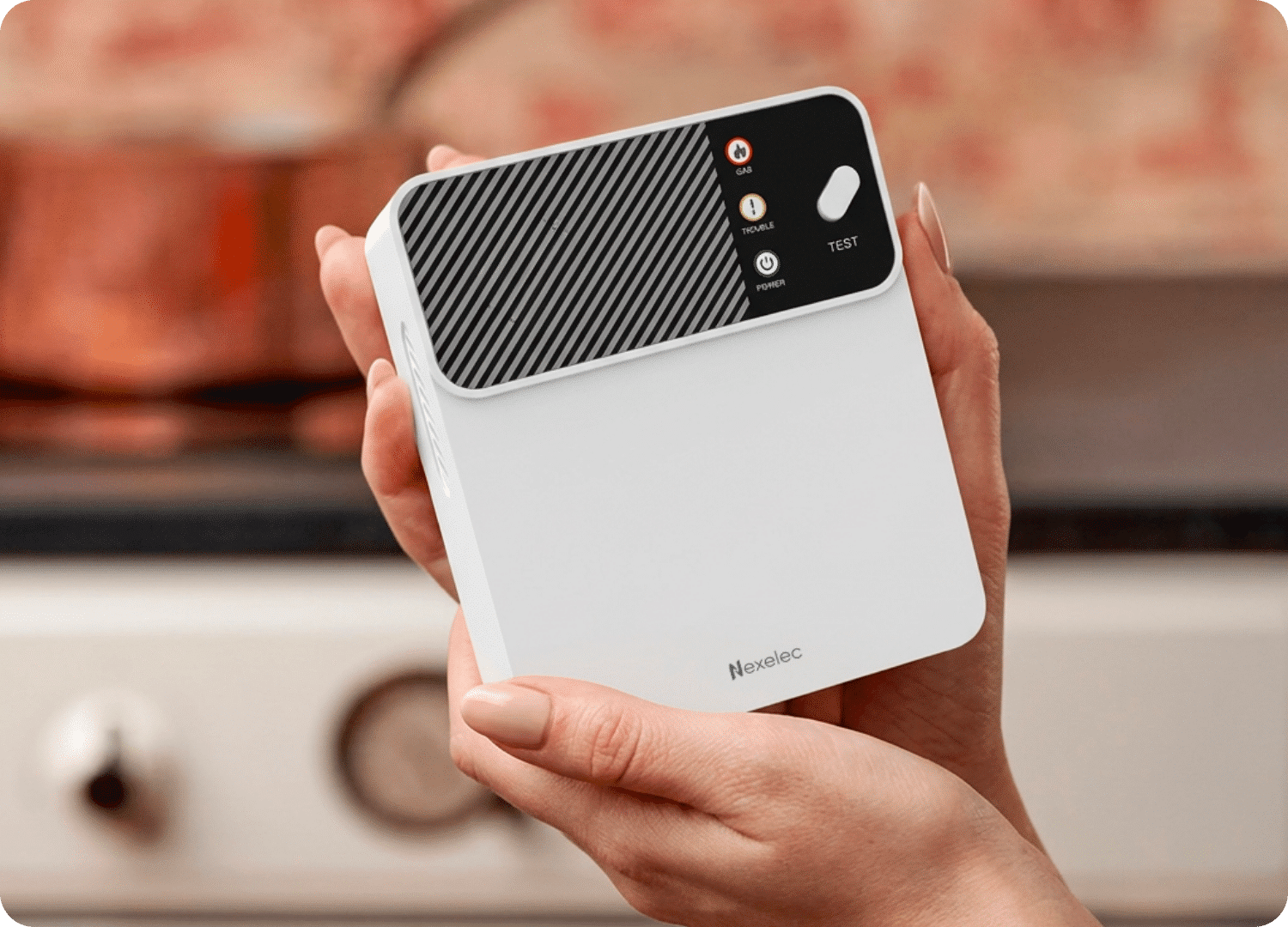
This is where the choice between alarm systems starts to matter beyond sensor technology alone. VIGAS, Nexelec’s connected device, ties into the NAVIXIS platform so a property team can see install dates and device status for every device without manual walkthroughs, which helps provide ongoing compliance rather than a one-time check. For a building where residents and tenants depend on those alarms to detect leaks before they become dangerous, that visibility matters: it helps a team catch disabled devices before they turn into safety gaps, and it gives owners a clearer answer if compliance is questioned after incidents. It also separates the ongoing costs of monitoring from the upfront financial cost of installation, which most boards find easier to plan for.
The January 1, 2027 Deadline
Local Law 102 of 2025 set the current compliance deadline for required natural gas alarms at January 1, 2027, with a possible extension to January 1, 2029 built into the law if the Department of Buildings couldn’t identify at least four distinct manufacturers of qualifying battery-powered alarms. That condition has already been resolved: on June 15, 2026, DOB confirmed it had identified at least four manufacturers, which means the deadline will not be pushed back further. Property owners and boards should treat January 1, 2027 as the date to plan around, not a placeholder that might move again.
Missing that deadline exposes a building to DOB violations and civil penalties, and potentially other enforcement action. Beyond the direct fine, owners who fall out of compliance can face added liability exposure if an incident occurs, along with the kind of insurance complications that tend to follow an unresolved code violation. None of that requires a leak to actually happen — the exposure exists simply from being out of compliance after the deadline passes.
A Practical Way to Land on Your Number
Rather than guessing, a workable process starts with confirming which buildings in a portfolio have natural gas piping, service, or appliances at all, then moving unit by unit to record every room containing a fuel-gas-burning appliance. From there, the alarm count for each unit is simply the number of qualifying rooms, and the building total is the sum across every covered unit — plus a corridor system if a Class B building’s owner chooses that path instead. VIGAS, Nexelec’s battery-powered natural gas alarm, is built for exactly this kind of rollout: no wiring or electrical outlet required, a sealed battery rated for ten years, and QR-based identification that ties into the NAVIXIS platform so a property team can track installation dates and device locations across dozens or hundreds of units rather than relying on a spreadsheet that falls out of date. The product doesn’t decide how many a building needs — that still comes down to the survey — but it does make managing whatever number that survey turns up considerably more straightforward.