
A natural gas alarm must be installed in the correct location to detect a potential gas leak as early as possible. Mounting a detector in the wrong room, too far from a gas appliance or at an unsuitable height can delay gas detection and reduce the protection provided to occupants.
For New York City homeowners, landlords and property managers, placement must also comply with Department of Buildings requirements and the manufacturer’s installation instructions. This guide explains where a natural gas alarm should be installed in residential buildings, managed properties and commercial environments.


Published on 4 August 2026
Where should a Natural Gas Alarm be installed?
In this article:
Where should a Natural Gas Alarm be installed in a home?
A natural gas detector is generally required in every room containing a fuel-gas-burning appliance. Potential leak sources may include a gas stove, boiler, furnace, water heater, fireplace or clothes dryer.
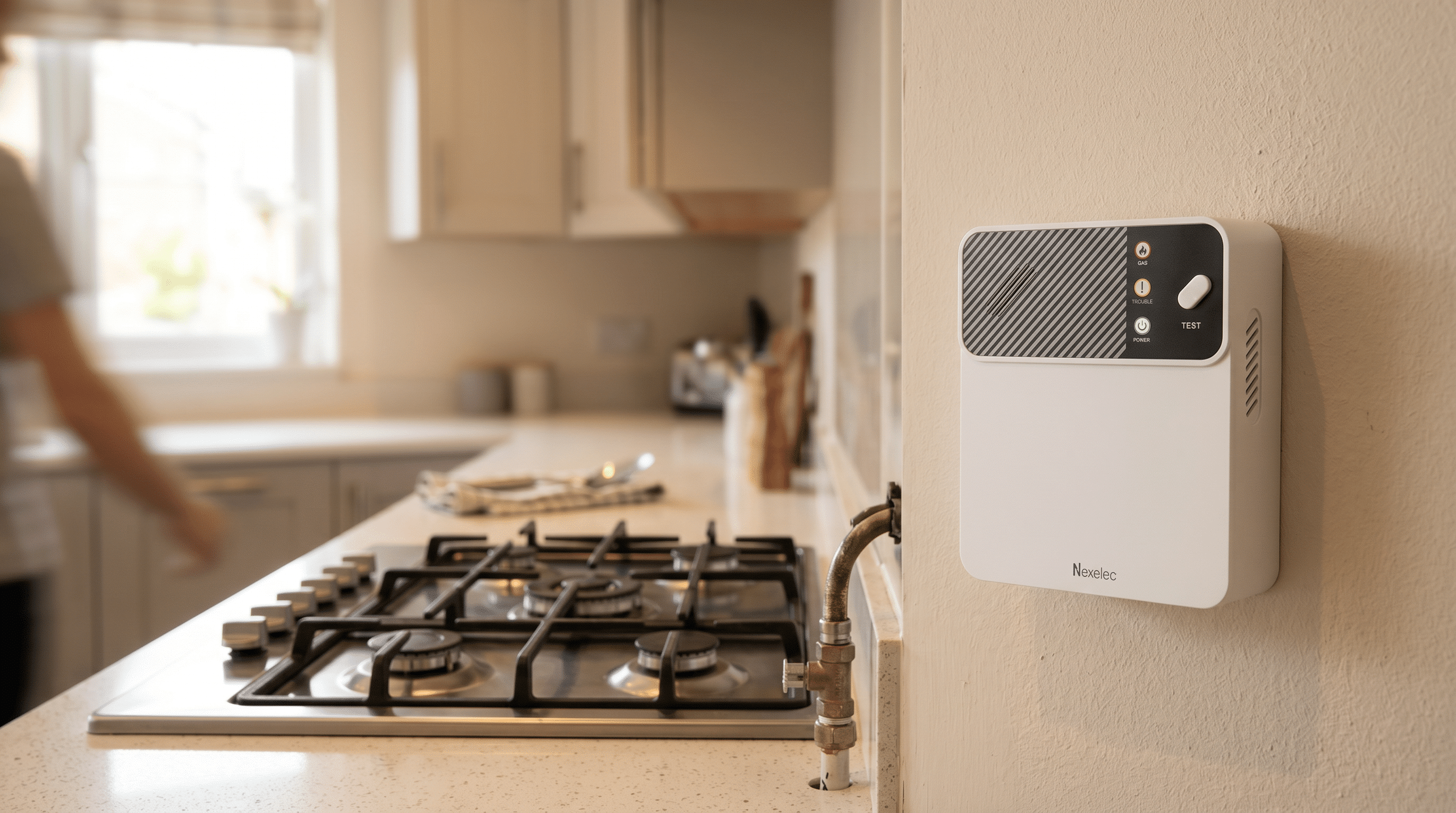
In New York City dwellings, the device must be located in the same room as the gas appliance. It must be positioned at least 3 feet and no more than 10 feet from the appliance, measured horizontally. The detector may be mounted on the ceiling or on a wall. For wall mounting, it must be no more than 12 inches below the ceiling.
This installation location creates enough separation from the appliance to limit unnecessary alarms while keeping the detector close enough to identify a natural gas leak. If the room does not allow the alarm to be installed at least 3 feet away, the installer should follow the manufacturer’s instructions or the applicable NFPA 715 placement requirements.
A large apartment may require more than one detector when gas appliances are located in separate rooms. A gas alarm installed in a kitchen should not be assumed to monitor a boiler room, basement or other distant area. Doors, walls and other obstructions can prevent leaking gas from reaching a detector quickly. Con Edison therefore recommends installing separate gas detectors where natural gas appliances are used in different areas of a home or building.
Should a Natural Gas Detector be installed on the wall or ceiling?
Both wall and ceiling installation may be permitted, depending on the detector and the applicable local rules. In New York City, a ceiling-mounted natural gas detector is acceptable. For wall placement, the alarm should be installed within 12 inches of the ceiling.
The final position should always follow the instructions supplied with the selected gas detector. Mounting requirements can differ depending on the gas detected, the sensor technology and the conditions in which the alarm was tested and listed.
Natural gas alarms should not be positioned solely according to convenience. Installers should verify that furniture, cabinets or structural features will not obstruct the detector. The device should also remain accessible for testing, inspection and replacement.
How far should the Alarm be from gas appliances?
For covered New York City dwellings, the required horizontal distance is generally between 3 and 10 feet from the fuel-gas-burning appliance. This rule applies to appliances such as gas ranges, furnaces, boilers and water heaters.
Installing the alarm directly above a stove or too close to an appliance may expose it to heat, grease, steam or normal combustion conditions. Placing it too far away could delay detection. Property teams should measure the distance horizontally rather than diagonally and document the installation location for each apartment.
When several appliances are installed in the same room, the placement should account for all potential leak sources while remaining consistent with the manufacturer’s installation requirements.
Residential and commercial Gas Alarm placement
Residential gas alarms are generally self-contained devices designed to warn occupants inside a house or dwelling unit. In multifamily housing, the installation plan should identify every apartment with gas service, the location of each gas appliance and the number of alarms required.
Commercial facilities may have larger rooms, several leak sources, mechanical ventilation or equipment that requires continuous monitoring. These conditions can affect the number and location of gas detectors. A commercial gas detection system may also include central monitoring, remote notification or several sensors connected to one control panel.
For Class B multiple dwellings in New York City, an owner may use alarms in each dwelling or, where permitted, a line-operated zoned natural gas detecting system covering public corridors and public spaces. The zoned system must be designed in accordance with the applicable requirements by a registered design professional.
New York City Natural Gas Alarm requirements
Local Law 157 introduced natural gas detection requirements for covered residential properties in New York City. Local Law 102 of 2025 subsequently changed the installation deadline.
In June 2026, the Department of Buildings confirmed that at least four manufacturers of compliant battery-powered alarms had been identified. Natural gas alarms must therefore be provided and installed by January 1, 2027, and the deadline will not be extended to 2029.
The current DOB rule requires applicable devices to conform to NFPA 715-2023 and to be listed and labeled to UL 1484 or UL 2075, as appropriate. Self-powered and plug-in detectors may be fitted by a building owner, maintenance employee, occupant or another person. Other electrical installations generally require a New York City licensed electrical contractor and the necessary permits.
VIGAS offers a self-powered option for residential deployment. Its sealed lithium power source is designed for the device’s 10-year service life, eliminating the need for an electrical outlet or routine power-source replacement. It also includes a QR code that can support installation and maintenance tracking across a property portfolio.
The VIGAS battery-powered natural gas alarm is designed to detect methane in homes, apartments. A self-powered detector also avoids the risk that a plug-in unit may be disconnected to free an electrical receptacle. Plug-in models with a backup power source can provide temporary continuity during an outage, but property staff must maintain and test both the main supply and the secondary source.
Common Natural Gas Alarm installation mistakes
One of the most frequent errors is treating a carbon monoxide alarm or smoke alarm as a substitute for natural gas detection. These devices monitor different hazards. A carbon monoxide alarm detects carbon monoxide created by incomplete combustion, while a natural gas detector identifies an unburned fuel gas leak. VIGAS detects natural gas, primarily methane; it does not detect carbon monoxide, smoke or propane.
Other mistakes include installing the device in a different room from the appliance, placing it beyond the permitted distance or failing to follow the manufacturer’s instructions. Property managers should also avoid assuming that one basement detector protects an entire multifloor building. Con Edison states that its service-line detector monitors only the area where the gas service enters the property and may not detect leaks in remote rooms or upper floors.