
A smoke sensor battery plays a crucial role in the reliability of every smoke alarm installed in homes, apartments, and commercial buildings. Many smoke detectors rely entirely on battery power to detect smoke and trigger an alarm in time. If the smoke alarm battery fails, the detector may not alert occupants when a fire begins. Considering that a fire can spread in less than five minutes, the battery life of smoke detectors becomes a major safety factor.
As someone working daily with IoT safety devices and smart building technologies, I often explain to property managers how modern battery powered smoke detectors and smart smoke alarms improve reliability. Today’s wireless and interconnected alarm systems combine long-lasting battery packs, remote monitoring, and advanced detection technologies to ensure buildings remain safe at all times.


Published on 17 March 2026
Smoke sensor battery: choosing the right battery for reliable smoke alarms
In this article:
Types of smoke alarm batteries available
Several types of smoke detector batteries are commonly used in residential and commercial smoke alarms. The most traditional solution is the 9 volt battery, often found in older battery operated smoke detectors. These batteries are affordable, but they typically require replacement every year, which can become time-consuming when managing multiple devices.
Modern battery smoke alarms increasingly rely on lithium battery packs, designed to deliver long lasting power and stable performance. These long life batteries can power a smoke detector for up to ten years, significantly reducing maintenance. Some advanced smart smoke alarms also integrate CR123 lithium batteries, which provide excellent energy density and reliable operation for wireless interconnected detectors. Choosing the right smoke alarm battery pack therefore directly impacts reliability, maintenance costs, and overall fire safety performance.
Step-by-step process for replacing batteries
Replacing a smoke detector battery is a simple operation, yet many people wait until the alarm battery begins to emit a warning beep before taking action. In reality, replacing smoke detector batteries proactively ensures that the smoke alarm always remains fully operational.
To replace a battery smoke detector, the first step is identifying whether the device is battery powered, battery operated, or part of a hardwired interconnected alarm system with a backup battery. After removing the detector from its mounting base, the old volt battery or lithium battery pack can be removed and replaced with a new smoke alarm battery. Once the new battery is inserted, the detector should always be tested using the alarm test button. This confirms that the power supply, sound signal, and detection system are working correctly before reinstalling the smoke detector on the ceiling or wall.
Best practices for smoke detector maintenance
Maintaining smoke alarms properly is essential to ensure reliable fire detection and early warning in residential buildings. Dust, insects, humidity, and aging electronics can all impact the performance of battery powered smoke detectors, which is why regular inspections are strongly recommended.
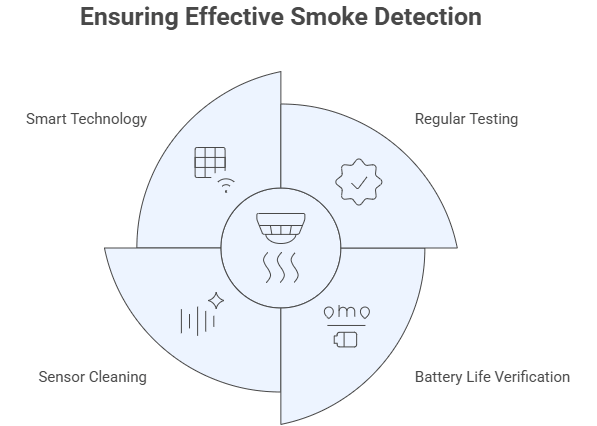
A good maintenance strategy includes testing each smoke alarm regularly, verifying the battery life, and ensuring the detector battery still delivers enough power. Cleaning the smoke detector sensors also helps prevent false alarms and detection failures. For building managers responsible for hundreds or thousands of smoke detectors, manual inspections can quickly become complex. This is where smart smoke detectors and wireless interconnected alarm systems provide a real advantage, as they can transmit real time information about battery status, sensor faults, or maintenance needs directly to maintenance teams.
Signs that it’s time to replace smoke alarms
Even with a new smoke alarm battery, every smoke detector eventually reaches the end of its operational life. Most battery powered smoke detectors are designed to operate reliably for around ten years, after which the sensing technology may become less accurate.
Several warning signs indicate that a smoke alarm should be replaced. Persistent chirping despite installing new smoke detector batteries, repeated false alarms, or visible damage to the detector housing can all indicate that the device is aging. Older battery smoke alarms may also lack modern safety features such as carbon monoxide detection, smart connectivity, or interconnected alarm communication. Replacing outdated smoke detectors with modern smart smoke alarms not only improves fire detection but also enhances building safety through better monitoring and longer battery life.
Legal requirements and safety standards related to smoke alarms
Most countries enforce strict regulations regarding the installation of smoke alarms in residential buildings. These regulations generally require at least one smoke detector in each dwelling, particularly near bedrooms or escape routes. Property owners are also responsible for ensuring that smoke detector batteries remain operational and that devices comply with approved safety standards.
Modern safety regulations increasingly encourage the use of interconnected alarms, allowing all smoke detectors in a building to trigger simultaneously when smoke is detected. Some safety systems also combine smoke detection with carbon monoxide alarms, improving overall occupant protection. For landlords and property managers responsible for large housing portfolios, ensuring compliance with these regulations requires reliable smoke alarm systems, proper battery maintenance, and clear documentation of inspections and replacements.
Nexelec smart smoke sensors for connected building safety
At Nexelec, we designed our smart smoke sensors specifically for professionals managing large fleets of smoke detectors. Our devices combine advanced smoke detection, long lasting battery technology, and wireless connectivity to simplify safety management in residential buildings.
The KARE+ connected smoke sensor is designed with a long lasting battery pack, optimized electronics, and powerful 85 dB alarms capable of alerting occupants quickly when smoke is detected. The device also integrates temperature and humidity monitoring, helping building managers better understand indoor conditions while improving energy efficiency and air quality. Thanks to its wireless communication protocols and the NAVIXIS digital logbook, property managers can monitor thousands of smart smoke detectors in real time, track maintenance history, and receive alerts when battery replacement or device inspection is required. This connected approach makes building safety more efficient while ensuring long lasting fire protection for occupants.
Choosing the right smoke sensor battery pack
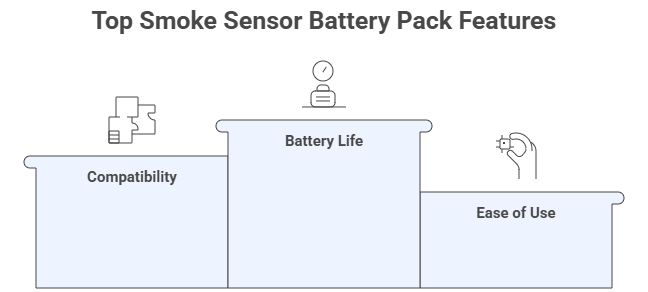
When purchasing a smoke detector battery pack, many customers compare price, brands, battery life, and compatibility with their smoke alarms. In most stores or online platforms, you can find volt battery smoke detector packs, lithium battery smoke alarms, and long lasting battery powered smoke detectors designed to operate for several years without replacement. The price of a smoke alarm battery pack can vary depending on the technology and the expected battery life, but investing in a long lasting battery significantly reduces maintenance time.
Many modern smart smoke sensor are also designed to simplify maintenance. With a large test button, an easy battery replace system, and clear alarm signals, users can quickly check whether their smoke detector batteries still provide enough power. For property managers or building owners managing many battery operated smoke detectors, choosing reliable battery powered devices ensures better safety while reducing the number of interventions required every few months.
How smart smoke detectors improve battery management
Managing the battery life of smoke detectors can quickly become complex, especially in buildings equipped with hundreds or even thousands of smoke alarms. Traditional battery operated smoke detectors often rely on manual inspections, which means maintenance teams must physically check each device, test the alarm button, and verify whether the detector battery still provides enough power. In many cases, the first sign of a problem is a low battery alert or a repetitive beep coming from the alarm. By that time, the battery smoke detector may already have been operating with reduced performance for several weeks or even months.
This is where smart smoke alarm technology brings significant improvements. Connected smoke detectors can send real time alerts through a dedicated app, notifying maintenance teams when a smoke alarm battery is low, when a device has been removed, or when a replacement is required. Instead of waiting for occupants to report issues, building managers can monitor the status of every battery powered smoke detector from a centralized platform. This approach improves safety while saving time, because technicians only intervene when necessary to replace batteries, update devices, or install a new battery pack. For customers managing large housing portfolios, this connected approach offers a smarter alternative to traditional battery smoke alarms, combining better visibility, easier maintenance, and a longer detector lifespan.