
Two boxes on a shelf, two different marks printed on them — one says “UL Listed,” the other says “ETL Listed,” and both claim to cover the same natural gas alarm standard. It’s a reasonable question to stop and ask: does one of those marks mean a safer product than the other, or are they just two ways of saying the same thing? The honest answer depends less on which logo is printed on the box and more on what standard that logo is actually certifying against, and for a natural gas alarm, that standard is almost always UL 1484.


Published on 8 October 2026
ETL Listed vs UL Listed: What Does UL 1484 Mean for a Natural Gas Alarm?
In this article:
What UL 1484 Actually Tests
UL 1484, titled “Fuel Gas Alarms,” covers electrically operated alarms built for residential use and recreational vehicles, designed to detect flammable gases — chiefly natural gas (methane) and propane — before a leak reaches a dangerous concentration. It does not apply to industrial or commercial gas detection equipment, to devices rated for hazardous locations under NFPA 70, or to combination smoke and fire detectors, which fall under separate standards entirely.
The current edition, published in 2025, tightened several of the requirements a manufacturer has to meet. Detection sensitivity now has to trigger at 10% of the Lower Explosive Limit, response timing is faster, and a unit has to resist sounding a false alarm when exposed to ordinary cooking fumes or common household chemicals. Testing also includes a corrosion cycle — 10 days as the baseline, with an optional extended 21-day cycle — along with checks across a range of temperature, humidity, and power supply conditions. The same edition also streamlined the path for alarms that combine gas detection with carbon monoxide detection in one housing, so a combination unit no longer has to be tested as if it were two unrelated products.
ETL Listed and UL Listed Are Two Marks on the Same Standard
Underwriters Laboratories issues the UL mark. Intertek issues the ETL mark. Both are Nationally Recognized Testing Laboratories under OSHA’s NRTL program, which means both are independently authorized to test products against published safety standards and confirm the result with their own certification mark. When a product is tested against UL 1484, it doesn’t matter which of those two labs ran the test — the requirements in the standard don’t change depending on who’s holding the clipboard, and an NRTL is required to follow the same testing procedure regardless of which lab it is.
That’s a meaningful point for anyone comparing products side by side: a natural gas alarm that’s ETL Listed to UL 1484 has cleared the identical bar as one that’s UL Listed to UL 1484. Neither mark is a lesser substitute for the other.
Why a Product Might Carry One Mark Instead of the Other
If the testing is equivalent, the reason a manufacturer ends up with one mark instead of the other usually comes down to practical factors rather than safety ones — Intertek has historically offered shorter lead times and lower testing costs than UL for some product categories, which matters when a manufacturer is trying to get a device to market. UL still carries broader name recognition with consumers, which is part of why some manufacturers list with UL anyway despite the added cost and wait. Either way, a label that reads “ETL Listed to UL 1484” is doing you a favor: it’s telling you plainly which standard the product was actually tested against, rather than leaving you to guess.
Intertek’s NRTL Recognition in Practice
Intertek’s ETL mark carries the same legal footing as a UL mark precisely because of how OSHA structured the NRTL program: a lab doesn’t earn NRTL status once and then test however it likes — it earns recognition for a specific scope of standards, and UL 1484 for residential natural gas alarms sits inside Intertek’s recognized scope the same way it sits inside UL’s own scope. Intertek’s accredited testing sites span North America, and its scope already covers a wide range of residential and gas-appliance equipment well beyond alarms, which is part of why manufacturers of fuel gas alarms often find Intertek a practical testing partner alongside UL rather than a lesser one.
UL 1484 Isn’t the Same Certification as UL 2075
It’s easy to see “UL” on two different gas detectors and assume they’re built to the same requirements, but UL 1484 and UL 2075 cover different ground. UL 2075, “Gas and Vapor Detectors and Sensors,” is the broader standard — it spans carbon monoxide and nitrogen dioxide detection, construction and performance requirements, and end-of-life signaling across both residential and industrial applications. UL 1484 is narrower by design: it applies specifically to flammable-gas alarms built for homes and RVs. A manufacturer building a general-purpose combustible gas sensor for commercial use is working against UL 2075; a manufacturer building a household natural gas alarm is working against UL 1484. Some jurisdictions and some combination products reference both, which is part of why checking which standard appears on a specific product’s documentation matters more than just seeing a UL or ETL mark somewhere on the box.
Where UL 1484 Shows Up in NYC’s Local Law 157
New York City’s natural gas alarm requirement gives UL 1484 a concrete legal role rather than a purely technical one. Guidance built around Local Law 157 and its implementing rule calls for installed alarms to be listed to UL 1484, with combination detection units sometimes referencing UL 2075 as well, and for larger Class B buildings, the alternative corridor-based detection system has to be designed in accordance with NFPA 715 by a registered design professional. The compliance deadline sits at January 1, 2027, a date the Department of Buildings confirmed as final in June 2026 after identifying at least four manufacturers of qualifying battery-powered alarms, which was the condition that would otherwise have triggered a further extension. For a building owner trying to satisfy that requirement, confirming that a device is actually listed to UL 1484 — not just generically “UL rated” — is the detail that determines whether an installed alarm counts toward compliance at all.
How a UL 1484 Alarm Detects a Leak and Alerts a Household
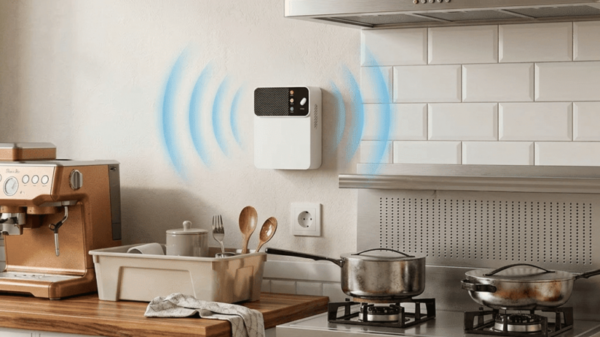
A natural gas alarm built to UL 1484 has to do two related things reliably: detect the gas, and protect the people in the room where it’s installed. Most residential units rely on an electrochemical or semiconductor sensor that reacts to methane or propane in the surrounding air, and once the concentration crosses the standard’s detection threshold, the unit sounds an audible alarm along with a visual indicator — typically a flashing light — so the signal registers even in a noisy kitchen, and the same visual indicator is checked for resistance to ordinary cooking heat during testing, not left to chance. Installation matters as much as the sensor itself: a detector mounted too far from a fuel-gas-burning appliance, or placed somewhere ordinary cooking heat regularly reaches it, can behave differently than the same unit performed under laboratory testing conditions. The standard’s corrosion and temperature testing approximates everyday household conditions, but it can’t account for every kitchen layout, which is why the manufacturer’s own installation instructions — not just the certification mark on the box — determine how well a specific detector ends up protecting a specific room.
A sealed, battery-powered design is common in alarms built for long-term residential use, since it removes routine wiring and maintenance from the equation entirely. The service life printed on the packaging is tested under the same standard’s conditions and typically runs several years at minimum, though the exact figure still depends on the manufacturer and the specific unit’s power design.
Documentation Worth Keeping Beyond the Box
For anyone installing these alarms to satisfy a building requirement rather than personal preference, it helps to keep more on file than just the alarm itself. A property owner working through a rule like NYC’s Local Law 157 generally wants to retain the manufacturer’s certification documentation for every unit installed across a building or across multiple dwellings, since the applicable rule is specific about which standard is required and a generic purchase receipt doesn’t demonstrate compliance on its own. The same installation record used to plan how many alarms a building needs can double as proof of which units went where, which matters if the Department of Buildings or a local fire official ever asks for evidence that an installed detector actually meets the required standard rather than simply carrying a UL or ETL logo somewhere on the packaging.
Requirements outside New York City vary by jurisdiction, and not every local code references UL 1484 by name the way DOB guidance does. The underlying logic still holds everywhere: a natural gas alarm’s certification standard, not its brand, is what an inspector, a fire official, or an insurer is actually checking when a claim or a compliance review comes up.
The reasoning behind this level of specificity is straightforward: a natural gas leak and a sustained carbon monoxide buildup are both silent, slow-building hazards a resident might not notice until it’s dangerous, and the whole purpose of a legally required alarm is to close that gap reliably. Guidance published alongside Local Law 157 treats a gas alarm and a smoke alarm as serving two different safety functions, so a building fully equipped with smoke detectors isn’t automatically covered for gas detection, and the reverse is true as well. Applicable rules generally expect a dwelling’s gas detection to be designed around where fuel-gas-burning appliances are actually located, not simply distributed by room count, which is also why installation instructions from the manufacturer — not a generic placement guide — are what a compliance review tends to check first. DOB’s own guidance for NYC gas-alarm compliance, much like guidance published by manufacturers such as DeNova Detect, repeatedly points back to UL 1484 as the line a device has to clear before it counts toward the requirement at all.
New York City isn’t unique in referencing a specific listing standard, but its Department of Buildings has been more explicit than most about it. DOB guidance tied to Local Law 157 names UL 1484 directly for the gas-detection portion of a dwelling’s required alarms, and a building’s compliance file is expected to show that standard against each installed unit, not just a general statement that “UL-certified” devices were used somewhere on the property. For co-op and condo boards managing units across a single building, that distinction is worth confirming with whichever contractor handles installation, since a detector certified to a different standard — even a legitimate one — doesn’t satisfy this particular dwelling-by-dwelling requirement. Nothing about this is unique to New York City, but NYC does require more documentation than most other jurisdictions, and DOB’s review process tends to assume a property manager can produce it on request rather than take a listing on faith.
Not every property owner needs to parse the full standard to use it well. What matters in practice is simple: a natural gas alarm either references UL 1484 on its documentation or it doesn’t, and for anyone subject to an applicable local requirement — NYC’s included — that single detail determines whether a device satisfies what’s actually required. DOB doesn’t ask a property manager to prove general safety; it asks for proof against this specific standard, applied to this specific type of natural gas alarm, which is exactly why a loosely worded safety requirement on paper has become a precise one in practice for anyone managing a covered property.
What the Certification Doesn’t Tell You
A UL 1484 listing confirms that an alarm detects combustible gas reliably and sounds in time to matter. It doesn’t say anything about how long the battery lasts, how the unit should be positioned in a room, whether it includes a Wi-Fi connection, or whether it also detects carbon monoxide — CO alarms are certified separately, typically under UL 2034, and a product built only to UL 1484 has no obligation to detect anything other than combustible gas. Manufacturers across the market, from DeNova Detect to First Alert to Nexelec, build to UL 1484 in different ways: different sensor technologies, different battery designs, different visual and audible alarm patterns. A natural gas alarm isn’t a smoke detector, and the two aren’t interchangeable even when they’re mounted on the same wall: smoke and combination smoke/CO units are certified under their own separate standards, because the sensing technology and the hazard involved are different from an unburned fuel gas accumulating in a room. Some manufacturers, including DeNova Detect and Nexelec, sell gas-only detectors so the device isn’t trying to do double duty; others build combination units that pair a UL 1484 gas sensor alongside a carbon monoxide sensor certified separately under UL 2034, inside one housing with one alarm horn. Either approach can satisfy a requirement like NYC’s, as long as the gas-detecting portion of the device is actually listed to UL 1484 — a combination unit marketed broadly as an all-in-one safety device still has to show that specific listing for its gas-detection function, not just a general certification claim. The certification is the floor a product has to clear, not a description of everything the product does, so reading the actual product instructions still matters for understanding battery service life, mounting height, and how the unit is meant to protect a specific room or appliance.
The same logic applies outside apartment buildings, too. A single-family house with a natural gas furnace or water heater faces a similar question, even where no local law explicitly mandates an alarm: a detector actually built and tested against UL 1484 catches a methane leak the way it’s supposed to, while one that only claims generic “gas safety” testing may not. Homeowners researching options from DeNova Detect, First Alert, or Nexelec will find that each brand’s compliance documentation states which requirements its product satisfies, and matching that documentation against whatever rule is applicable — whether that’s NYC’s Local Law 157 or a different jurisdiction’s building code — remains the only way to know for certain that a specific alarm meets a specific requirement rather than a similar-sounding one.
Checking the Mark Before You Buy
Here’s a practical guide anyone evaluating these alarms can actually use: check that the product documentation references UL 1484 specifically, not just a UL or ETL mark in general; confirm who performed the testing — UL or Intertek — since the difference affects nothing about how the unit will respond to a real methane or propane leak; read the installation instructions for mounting height and distance from each fuel-gas-burning appliance, since the standard’s testing can’t substitute for correct placement in a specific house or apartment; and keep a record of which dwelling received which unit if the purchase is tied to a building-wide requirement like NYC’s. None of that is complicated, but skipping any one of those steps is how a property ends up with a technically certified alarm that still doesn’t catch leaks the way it’s designed to, or doesn’t satisfy what NYC’s Department of Buildings actually requires of a covered dwelling.
A product’s listing card — the document a manufacturer files with its NRTL and can usually produce on request — spells out exactly which standard, which edition, and which specific model were tested. For a natural gas alarm, that card should show UL 1484 by name, the sensor type, and the applicable sensitivity threshold, rather than a generic “safety tested” statement. A property manager comparing residential detectors from different manufacturers, including DeNova Detect, First Alert, or Nexelec, can ask for this card directly instead of relying on marketing language on the retail packaging, and it remains the fastest way to confirm a specific detector actually satisfies a specific requirement like NYC’s rather than a nearby but different one such as UL 2075.
In practice, the easiest way to confirm a natural gas alarm meets the applicable requirement is to look at the product’s own documentation for the specific standard number — “UL 1484” — rather than relying on a logo alone, since both the UL mark and the ETL mark satisfy the same requirement when they reference that standard. Nexelec’s VIGAS, for example, is ETL Listed by Intertek to UL 1484, built around a semiconductor sensor calibrated to the standard’s detection threshold, and is available through authorized distributors including 123 Security Products. Whichever brand or mark ends up on the wall, the certification number on the box — not the logo next to it — is what actually tells you the alarm was built and tested to do its job.