
With New York City’s natural gas alarm deadline approaching, property owners and managers are increasingly asking the same question:


Published on 24 September 2026
Natural Gas Detector Cost in NYC: 2026–2027 Guide
In this article:
How much does it cost to install natural gas detectors in a NYC apartment building?
There is no single price that applies to every property. The total cost depends on the number of alarms required, the type of device selected, the building configuration, installation requirements and the size of the property portfolio.
The New York City Department of Buildings has confirmed that required natural gas alarms must be installed on or before January 1, 2027.
For a complete overview of the regulation, read our NYC Local Law 157 natural gas alarm requirements guide.
For owners managing dozens, hundreds or thousands of apartments, planning early can make a significant difference to both the initial project cost and long-term cost of ownership.
What Determines the Cost of a Natural Gas Detector in NYC?
The purchase price of the natural gas alarm is only one part of the overall budget.
Property managers should consider:
- Number of alarms required
- Detector type and certification
- Battery-powered, plug-in or hardwired configuration
- Installation labor
- Electrical work where required
- Access to occupied apartments
- Maintenance requirements
- Battery replacement
- End-of-life replacement
- Record keeping and fleet management
Across a large multifamily portfolio, even relatively small differences in installation or maintenance cost per device can significantly affect the overall project budget.
How Many Natural Gas Detectors Will Your Building Need?
Before calculating the cost, property owners first need to determine how many natural gas alarms are actually required.
It is not necessarily as simple as:
100 apartments = 100 alarms.
NYC requirements depend on factors including building classification, gas piping, gas appliance locations and the layout of individual dwelling units. The DOB provides specific guidance for Class A and Class B multiple dwellings and other covered residential properties.
We have prepared a dedicated guide explaining this calculation:
How Many Natural Gas Detectors Do I Need in My NYC Apartment or Building?
Determining the correct quantity before ordering is important, especially for property managers purchasing alarms for multiple buildings.
1. Natural Gas Detector Purchase Price
The first cost to consider is the alarm itself.
Natural gas alarm prices vary according to factors such as:
- Certification and listing
- Power source
- Expected service life
- Sensor technology
- Installation method
- Order quantity
- Additional identification or fleet-management capabilities
For a large property portfolio, however, unit price should not be considered in isolation.
A lower initial purchase price may not always result in the lowest overall cost if the product requires additional electrical work, battery replacements or recurring maintenance interventions.
2. Natural Gas Detector Installation Cost
Installation is another important part of the budget.
NYC DOB guidance specifies installation requirements based on the location of fuel-gas-burning appliances. When applicable, an alarm must generally be located at least 3 feet and no more than 10 feet horizontally from the appliance.
For a detailed explanation of placement requirements, see our guide:
Where to Install a Natural Gas Alarm in NYC
Installation costs can depend on:
- Number of apartments
- Number of required alarm locations
- Building accessibility
- Resident scheduling
- Device mounting method
- Electrical requirements
- Number of site visits
For a large occupied building, the time required to access hundreds of apartments can become an important part of the overall deployment cost.
3. Battery-Powered vs. Hardwired Installation
The power source can significantly affect installation complexity.
Depending on the applicable NYC requirements and building configuration, natural gas detection may involve battery-powered alarms or other permitted systems.
DOB guidance specifically addresses the use of battery-operated natural gas alarms in covered existing buildings.
A self-contained battery-powered alarm can eliminate the need for an electrical outlet or new wiring at the detector location.
This can be particularly relevant when retrofitting existing multifamily buildings where hundreds or thousands of devices must be installed.
4. Maintenance and Battery Replacement Costs
Property owners should also look beyond the initial installation.
Depending on the detector selected, long-term expenses may include:
- Replacement batteries
- Maintenance visits
- Apartment access
- Technician labor
- Device testing
- Administration
- Replacement at end of life
These recurring costs can become significant when multiplied across a large portfolio.
NYC HPD also requires property owners to maintain information related to detector installation and the manufacturer’s suggested useful life.
For this reason, a detector’s total cost of ownership can be more useful than simply comparing its purchase price.
5. End-of-Life Replacement
Natural gas alarms have a limited service life.
Property managers should therefore consider replacement costs from the beginning of the project rather than treating installation as a one-time expense.
HPD requires records including the date a device was installed and the expiration date of the manufacturer’s suggested useful life.
For a portfolio containing thousands of alarms, being able to identify where each detector is installed and when it must be replaced can simplify future budgeting and maintenance planning.
Can NYC Landlords Charge Tenants for Natural Gas Detectors?
This is an important distinction when calculating the cost of a Local Law 157 project.
According to NYC HPD, in applicable circumstances owners may charge $25 for each natural gas detector installed. Different reimbursement rules apply depending on the building type, and Class B occupants are treated differently.
That $25 amount is not the retail price of a natural gas detector.
It is the amount specified by HPD for tenant reimbursement in applicable cases.
For complete information on owner and tenant responsibilities, consult the official NYC HPD Smoke, Carbon Monoxide and Natural Gas Detectors guidance.
Example: Budgeting for a 100-Unit Apartment Building
Consider a property manager preparing a 100-unit apartment building for the January 1, 2027 deadline.
The budget should not simply be:
100 apartments × detector price
Instead, property teams should consider several categories.
Detector quantity: determine the actual number of required alarm locations.
Equipment: multiply the required quantity by the applicable purchase price or volume price.
Installation: account for mounting, labor and access to dwelling units.
Electrical work: determine whether the selected detection solution requires electrical installation.
Administration: include tenant communication, scheduling and record keeping.
Maintenance: consider battery and servicing requirements throughout the life of the alarms.
Replacement: plan for detector replacement at the end of its useful life.
For larger portfolios, these factors can have a substantial impact on total project cost.
Why Total Cost of Ownership Matters
Consider two natural gas alarms with different purchase prices.
The lowest-priced detector is not necessarily the lowest-cost solution over its full service life.
Property owners should compare:
| Cost factor | What to consider |
|---|---|
| Equipment | Initial detector price |
| Installation | Labor and time per unit |
| Electrical work | Wiring or outlet requirements |
| Batteries | Replacement requirements |
| Maintenance | Technician visits |
| Administration | Device and installation records |
| Replacement | Expected useful life |
This becomes particularly important for property managers deploying hundreds or thousands of alarms.
VIGAS: Designed for Large Residential Deployments
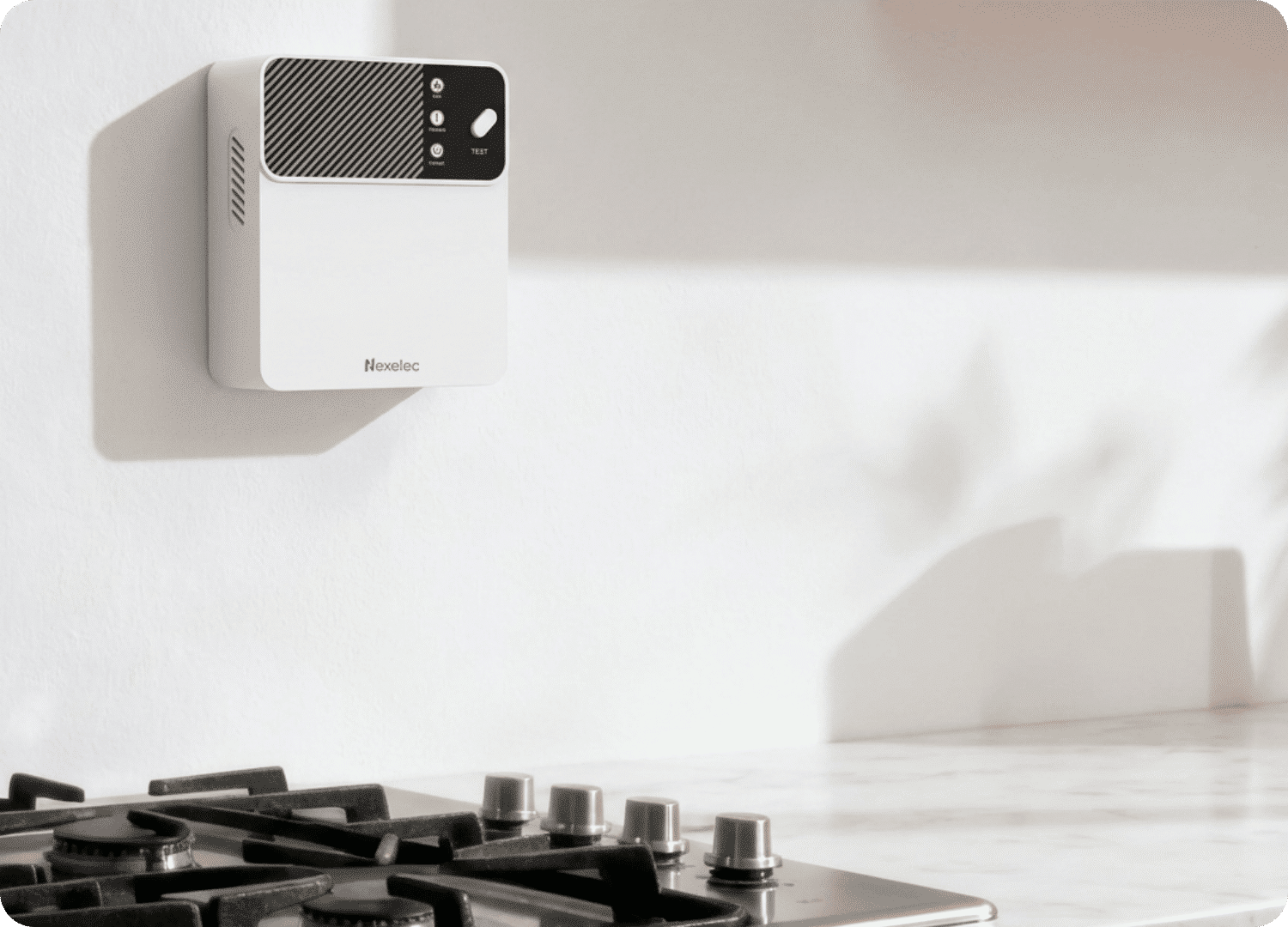
VIGAS by NEXELEC is a battery-powered natural gas alarm designed for indoor residential environments.
VIGAS detects natural gas, primarily methane, and provides audible and visual warning when methane reaches the alarm threshold of 10% LEL.
The alarm is ETL Listed by Intertek and conforms to UL 1484. It uses a sealed lithium battery designed for a 10-year service life, with no electrical outlet or hardwiring required.
10-Year Sealed Battery
The sealed battery is designed to power VIGAS throughout its 10-year service life, eliminating routine battery replacement.
No Outlet or Hardwiring
VIGAS is self-powered and does not require an electrical outlet or wiring, which can simplify deployment in existing residential properties.
ETL Listed — Conforms to UL 1484
VIGAS is ETL Listed by Intertek and conforms to UL 1484 for residential natural gas alarm applications.
QR-Based Identification
VIGAS includes QR-based identification to help property teams organize detector information across multi-unit deployments.
For more information about how the product fits into New York City’s requirements, read:
VIGAS Natural Gas Alarm and NYC Local Law 157: A Guide for Property Owners
Buying Natural Gas Detectors in Bulk in NYC
For owners and management companies purchasing hundreds or thousands of detectors, volume pricing can substantially change the equipment portion of the project budget.
Property teams preparing a large project should consider:
- Number of properties
- Number of dwelling units
- Estimated detector quantity
- Building deployment schedule
- Installation schedule
- Delivery requirements
- Future replacement needs
Rather than purchasing alarms building by building at the last minute, portfolio owners can plan procurement according to the number of locations that need to be equipped.
Need pricing for your NYC portfolio?
Contact NEXELEC to discuss VIGAS volume pricing for your buildings.
CTA button: REQUEST VOLUME PRICING
Je ferais pointer ce bouton directement vers votre formulaire Request a Quote.
Don’t Wait Until the January 1, 2027 Deadline
The New York City Department of Buildings has confirmed that required natural gas alarms must be installed on or before January 1, 2027. DOB announced in 2026 that it had identified at least four manufacturers of qualifying battery-powered alarms, confirming the 2027 implementation timeline.
You can read our detailed explanation here:
Local Law 157 Deadline Confirmed: Natural Gas Alarms Are Due January 1, 2027
Large property portfolios should allow sufficient time to:
- Identify covered properties
- Review gas appliance locations
- Determine required quantities
- Select appropriate alarms
- Secure inventory
- Coordinate resident access
- Complete installations
- Maintain the required records
Property owners can also consult the official NYC Department of Buildings Natural Gas Detection Devices FAQ for current regulatory guidance.
Frequently Asked Questions About Natural Gas Detector Costs in NYC
How much does a natural gas detector cost in NYC?
The price varies depending on the alarm, certification, power source, service life, installation requirements and purchase quantity. Property managers should consider the overall deployment and maintenance cost rather than equipment price alone.
Does NYC require natural gas detectors?
New York City requires natural gas detection in covered residential properties under Local Law 157 and related rules. The DOB has confirmed the January 1, 2027 installation deadline.
Learn more in our complete NYC Local Law 157 guide.
Can NYC landlords charge tenants for natural gas detectors?
In applicable properties, NYC HPD specifies a $25 reimbursement amount for an individual natural gas detector. Class B buildings and other situations have different rules.
How many natural gas detectors does my building need?
There is no universal one-detector-per-apartment formula. Requirements depend on the property type, gas appliances, piping and building configuration.
Read our dedicated guide: How Many Natural Gas Detectors Do I Need in My NYC Apartment or Building?
Where should a natural gas detector be installed?
Placement depends on the gas-burning appliance and applicable requirements. DOB generally requires alarms associated with an appliance to be installed at least 3 feet and no more than 10 feet horizontally from it.
See our NYC natural gas alarm installation guide.
Is VIGAS UL 1484 listed?
VIGAS is ETL Listed by Intertek and conforms to UL 1484.
How long does VIGAS last?
Its sealed lithium battery is designed to power the alarm throughout its 10-year service life.
Prepare Your NYC Properties for 2027
The cost of a natural gas alarm deployment depends on much more than the individual detector price.
For multifamily property owners and managers, the key factors include quantity, installation, power requirements, maintenance, administration and replacement.
Discover VIGAS Natural Gas Alarm
or
REQUEST VOLUME PRICING